Glass, stone, double height ceilings, open plan. The rooms people pay the most for are, acoustically, the worst rooms you will ever be asked to fill. Understanding why is the difference between a client who is quietly disappointed and one who cannot stop showing the place off.
Walk into a flagship villa today and you can almost hear the problem before a single speaker plays. Floor to ceiling glazing. Polished stone. A ceiling two storeys up. An open plan volume that flows from kitchen to lounge to terrace with nothing to stop the sound. It is beautiful. It is also a hall of mirrors for audio.
Hard surfaces reflect. Large volumes dilute. Put a conventional speaker in that space and the sound bounces off every flat surface, arrives at the listener two or three times over, and smears into something loud but vague. Turn it up and it gets worse, not better. The detail collapses exactly when the client leans in to enjoy it.
A typical box speaker is a point source. It radiates sound in a wide sphere, throwing as much energy at the ceiling and floor as at the listener. In a small, soft room you get away with it. In a tall, hard one, those stray reflections are the whole problem. The room fights the speaker, and the room wins.
Output is the second trap. To fill a large volume you push the speaker harder, and as it works harder a cone driver starts to compress and distort. So the easy fix, more volume, is the very thing that strips out the clarity you were chasing.
This is where planar magnetic line source design changes the maths. Instead of a small cone, a tall, ultra light film driver moves the air evenly across its whole surface. It projects sound forward in a controlled column rather than spraying it everywhere, so far less energy ends up bouncing off the ceiling and floor. Coverage stays even from the front of the room to the back.
Because the driver is large and barely working, it stays clean at volume. Detail survives where a cone would harden. That is the trick to making a vast, reflective room sound effortless rather than merely loud: control the dispersion, and keep distortion low while you do it.
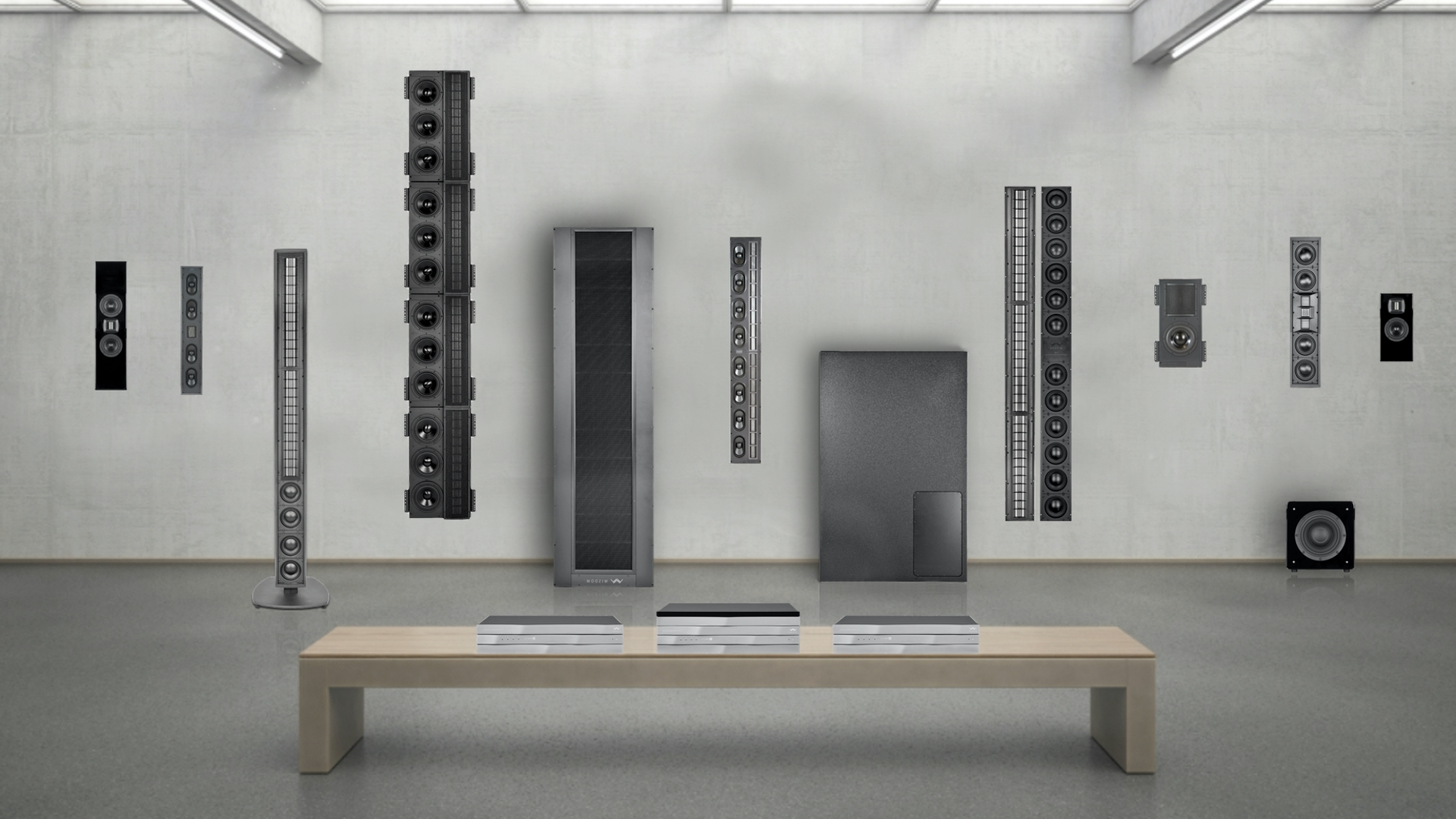
None of this is much use if the hardware ruins the look the architect fought for. The good news is that the same technology now hides. Thin film planar drivers go into walls and ceilings, finished flush and painted over, while the statement floor standing models can tower behind acoustically transparent screens or vanish into bespoke joinery. The client hears a reference grade room. They see a clean one.
Most acoustic disappointment is not a budget problem. It is a physics problem hiding inside a beautiful room. Get the speaker technology right for the space, and the rooms that are hardest to fill become the ones worth listening in.
Cache distributes Wisdom Audio across the UAE with local stock and technical support for integrators.
We use cookies to ensure you get the best experience on our website.
